Islamic architecture: History and essential characteristics
Islamic architecture is a reflection of the rich history, culture and religion of Muslim peoples. From its origins in the Arabian Peninsula, it has evolved and influenced various regions of the world. This architectural style is characterized by the use of elements such as arches, vaults, minarets and detailed decorations. Its adaptation to different geographical contexts has given rise to a diversity of forms and artistic expressions over the centuries.
Origins and expansion
The origins of Islamic architecture are deeply linked to the expansion of Islam and the fusion of diverse architectural traditions, which emerged as believers settled in multiple territories. This evolution resulted in a unique and distinctive architectural style.
Foundation of Islam and early architectural developments
The foundation of Islam dates back to the 7th century, when the Prophet Muhammad began to spread the new faith in the Arabian Peninsula. After the Hijra in 622, when he moved from Mecca to Medina, the foundations of an Islamized community were laid, which was also reflected in its architectural environment. The first buildings, predominantly functional, were simple and responded to the needs of the community, without too many ornaments. However, over time, the buildings began to incorporate artistic elements that would be present in later works.
Initial cultural and architectural influences
Islamic architecture did not emerge in a vacuum. From its inception, it absorbed and adapted influences from pre-existing cultures, creating a distinctive and diverse style.
Roman and Byzantine architecture
Roman and Byzantine influences were significant. These styles contributed advanced construction techniques, such as the use of the arch and the vault. Buildings such as Christian basilicas and Roman baths served as inspiration for the planning and design of mosques. The use of large interior spaces and the layout of the buildings reflected these legacies, as well as the importance of natural lighting.
Persian and Sassanid architecture
On the other hand, Persian influence, especially after the fall of the Sassanid Empire, played a crucial role in urban planning and architectural aesthetics. Elements such as iwans, large portals giving access to courtyards, and the incorporation of gardens symbolizing earthly paradise were adopted. Attention to detail and ornamentation were also valuable legacies of this tradition, which would be combined with new Islamic concepts over time.
Geographic expansion and adaptation to new territories
As Islam spread beyond Arabia, it adapted to the local characteristics of each region. From the Iberian Peninsula to the Indian subcontinent, Islamic architecture was transformed, amalgamating indigenous elements with Islamic principles.
Military conquests, along with trade, facilitated the spread of Islam and its architecture. Each new land visited by Muslims brought with it the implementation of new techniques and the use of materials available in the environment. For example, in the Iberian Peninsula, the use of brick and ceramics has left a significant mark, while in North Africa, stone plays a prominent role in construction. This process of adaptation not only resulted in a rich variety of styles, but also consolidated Islamic architecture as a cultural expression of the Muslim world.
General characteristics of Islamic architecture
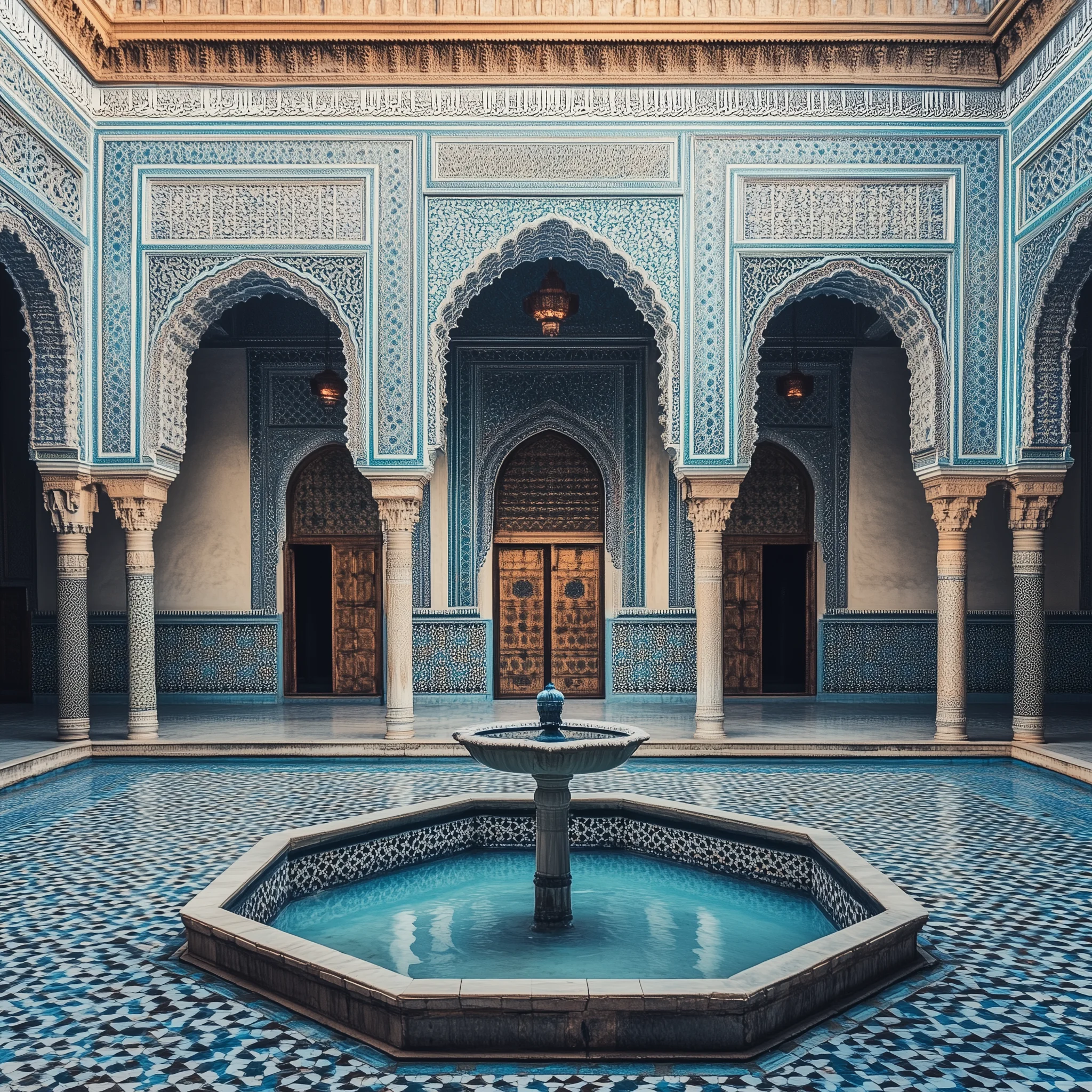
Islamic architecture is distinguished by its aesthetic richness and profound symbolism. Each architectural element is designed with spiritual fervor and attention to detail, resulting in memorable buildings that reflect the beliefs and culture of their creators.
Use of geometry in art
Geometry is one of the most visible and significant characteristics of Islamic architecture. This approach translates into the use of repetitive shapes and patterns that symbolize the infinity and order of the cosmos. Geometric designs not only adorn surfaces, but are also fundamental to the very structure of buildings.
Master craftsmen employed complex techniques to create mosaics and tiles that embellish facades and interiors. These works are not only aesthetically pleasing, but often contain mystical meanings. The repetition of geometric shapes invites contemplation and meditation, serving as a bridge between the tangible and the spiritual.
Arches and vaults
Arches and vaults are fundamental elements in Islamic architecture. Apart from their structural function, their use also has a symbolic component, evoking the connection between the earthly and the divine.
Types of arches
- Horseshoe arch: This distinctive design is often used in mosques and historic buildings, lending a unique character to the structures.
- Lobed arch: Composed of multiple lobes, this type of arch is a clear example of the ability of Islamic architects to combine functionality and beauty.
- Round arch: This arch, which derives from earlier styles, is integrated into Islamic architecture with a renewed approach and adapted to the needs of its buildings.
Evolution and symbolism of vaults
Vaults also occupy a prominent place in Islamic architecture. These curved structures not only provide support, but also create a sense of elevation towards the sky. Over time, different styles developed, such as the barrel vault and the ribbed vault.
The use of vaults allows the creation of wide and luminous spaces that are essential in mosques. This concept of open space manifests the desire to approach the divine, representing a connection between the monastic and the cosmos.
Minarets and their importance
Minarets are emblematic elements of Islamic architecture, standing out in the silhouette of many Muslim cities. These tall towers, which accompany mosques, serve a practical and spiritual function, raising the call to prayer to the community.
Regional shapes and styles
- Cylindrical minarets: Common in Ottoman architecture, these minarets are slender and elegant, often adorned with ornamental details.
- Square minarets: This style is more frequent in the architecture of the Iberian Peninsula, where they are used to emphasize the monumentality of the mosques.
- Spiral minarets: Characteristic of some mosques in North Africa, these minarets stand as iconic examples of architectural innovation.
Detailed decoration
Decoration in Islamic architecture is a manifestation of the rich artistic tradition of Muslim culture. Every surface can be embellished with intricate details that reflect the devotion and care of the craftsmen.
Arabic calligraphy
Arabic calligraphy is an important component in the ornamentation of buildings. Quranic verses and inspirational phrases are meticulously designed and engraved on walls, adding a palpable spiritual dimension to spaces. This fusion of art and writing not only beautifies, but also educates and evokes reverence for the sacred.
Floral motifs and sculptures
Floral motifs decorate many structures, symbolizing the beauty of nature and divine creation. Domes and arches are often adorned with elaborate carvings and reliefs that reflect natural and geometric patterns, creating a visual dialogue that invites contemplation.
Light manipulation
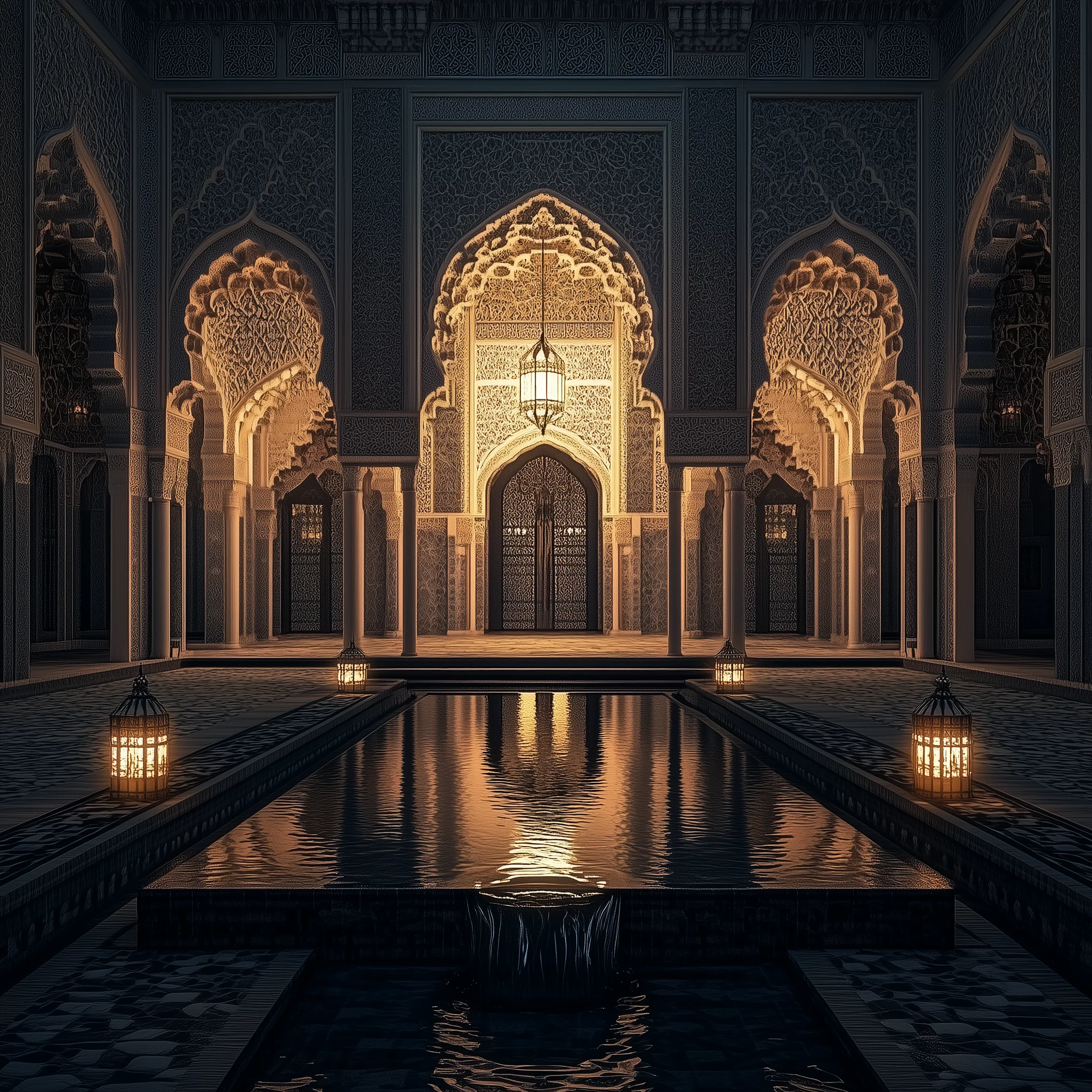
Light plays a crucial role in Islamic architecture, used to enhance the spirituality of spaces. The careful arrangement of windows, lattices and skylights allows natural light to flood the interiors, creating atmospheres that change throughout the day.
This control of light, along with reflection on polished surfaces and interaction with tile colors, adds an additional dimension to the architectural design. This artistic use of light transforms each space into a place of calm and reflection.
Use of materials
The choice of materials in Islamic architecture is fundamental to its identity. Architects employ a variety of local resources, resulting in the adaptation of buildings to their natural and cultural environment.
- Brick: A versatile material used in the construction of many mosques and palaces. Its ease of shaping allows for a wide variety of designs.
- Stone: Favored for its durability, stone is common in monumental structures, lending an air of grandeur and permanence.
- Wood: Used for ceilings and decorations, the wood is carved with grace, showing the mastery of craftsmen through the centuries.
- Ceramics and tiles: With vibrant colors and complex patterns, these materials are key in ornamenting surfaces, creating visually stunning environments.
- Plaster: An essential element for decoration, used in reliefs that embellish the walls and ceilings of buildings.
Islamic architecture is not only an expression of technique and art, but also a dialogue between the environment and spirituality, where every material, pattern and light is integrated to create a unique and transcendental experience.

Typology of Islamic buildings
Islamic architecture encompasses a wide variety of buildings that play essential roles in the social, religious and cultural life of Muslim communities. These structures reflect the diversity and richness of the Islamic architectural tradition over the centuries.
Mosques
Mosques are at the heart of the spiritual life of the Islamic community. Beyond their religious function, they become spaces for social and cultural encounters. Each mosque has unique characteristics that reflect its regional context and history.
Main components of a mosque
Mosques have several architectural elements that are fundamental to their design and functionality. Among the most prominent are:
- Prayer room: It is the main space where the faithful gather to pray. It is generally oriented towards Mecca.
- Mihrab: A niche in the wall indicating the direction of the Qibla, i.e., the direction towards Mecca.
- Minaret: A tower from which prayer is called to prayer. Its design varies widely from region to region.
- Courtyard: Many mosques have a central courtyard that provides an open space for prayer and socializing.
Regional variants
Throughout the Islamic world, mosques have adopted different architectural styles, influenced by local culture, available materials and historical era. For example:
- The Andalusian mosques in Spain present elements of Hispano-Islamic architecture, with horseshoe arches and rich ceramic decorations.
- In the Indian subcontinent, Mughal influences can be observed, where large domes and ornamental complexes stand out.
- Ottoman mosques, such as the Blue Mosque in Istanbul, are known for their massive domes and their impressive use of color and light.
Palacios
Islamic palaces represent the power and wealth of the dynasties that built them. These buildings were not only residences, but also centers of administration and culture. Their design reflects a blend of functionality and artistic beauty.
Distinctive elements in the palaces
Islamic palaces often include special architectural features that emphasize their grandeur:
- Iwan: A large vaulted portico giving access to interior courtyards, common in Persian architecture.
- Decorative halls: Spaces designed for the entertainment and reception of dignitaries, adorned with intricate plasterwork and mosaics.
- Gardens: Often designed in the style of Paradise, with fountains and vegetation, symbolizing abundance and beauty.
Gardens and patios
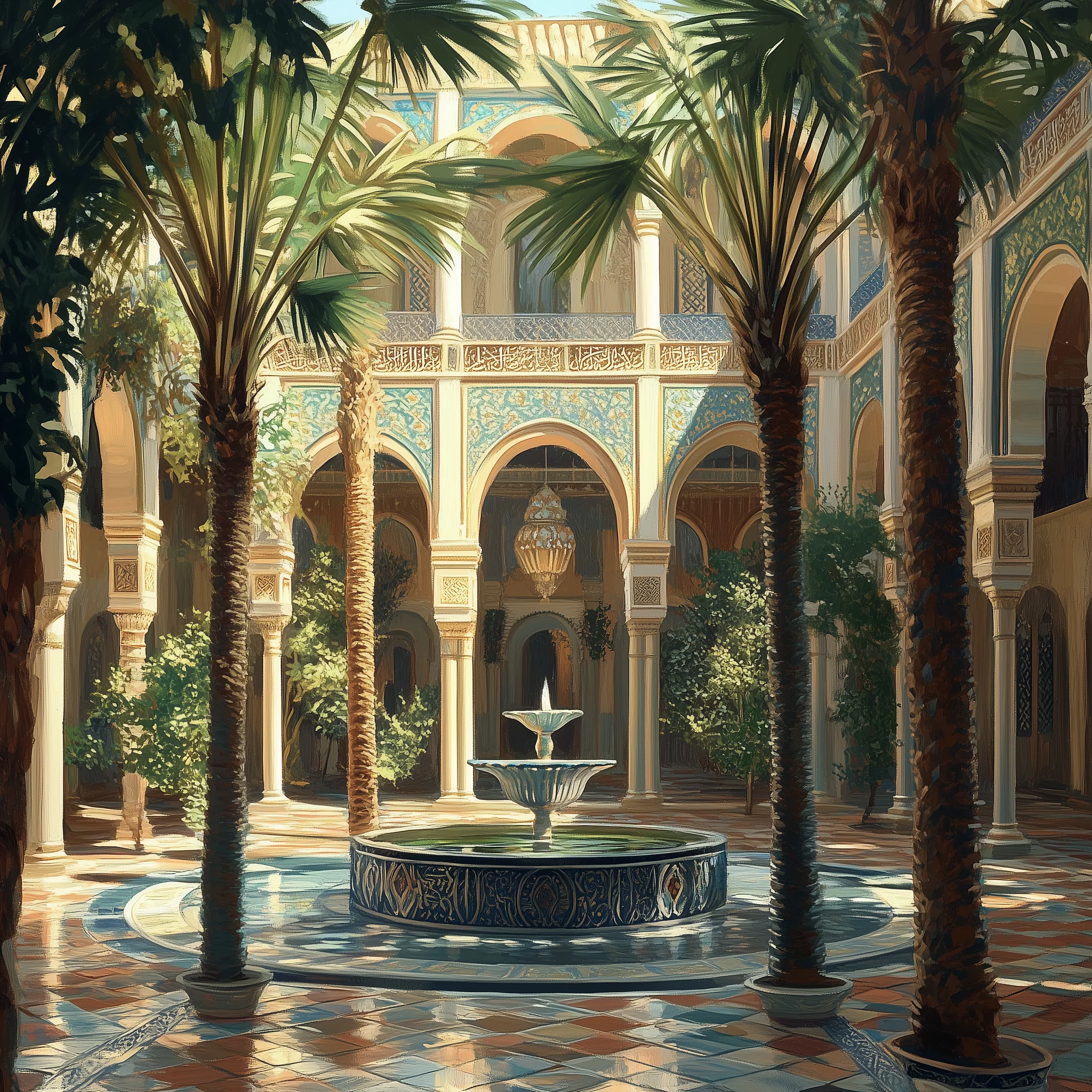
Gardens are essential complementary elements in Islamic palaces. These green spaces not only serve as an aesthetic refuge, but also fulfill symbolic and spiritual functions. Their structure usually follows the quadripartite model, representing divine creation. Courtyards surrounded by arcades offer spaces for gathering and rest, providing a cool and serene atmosphere.
Tombs and mausoleums
Islamic funerary architecture is equally significant. Tombs and mausoleums not only commemorate the deceased, but also reflect beliefs about the afterlife. These buildings are characterized by their beauty and spiritual symbolism.
Design and symbolism
Mausoleums are usually designed with great detail, manifesting a sense of reverence for the deceased. They commonly feature:
- Domes: Classified as a symbol of the ascension of the soul towards God.
- Inscriptions: Verses from the Koran are frequently engraved on the surfaces, highlighting the relationship between the earthly and the divine.
- Patios: Outdoor spaces that are often landscaped, intended for contemplation and remembrance.
Highlighted examples
Some emblematic mausoleums of the Islamic world include:
- Taj Mahal: Located in India, considered one of the wonders of the modern world, it is a tribute to eternal love and a sublime example of Mughal architecture.
- Humayun's Mausoleum: A precursor to the Taj Mahal, it incorporates Persian influences and is a clear example of cultural synergy in architecture.
Public baths (Hammams)
Hammams are a fundamental part of social life in many Islamic cultures. These public baths not only serve hygienic functions, but also serve as meeting and socializing points in the community.
Function and structure
The typical hammam structure is designed to guide the visitor through a series of spaces that allow for cleansing and relaxation. These spaces include:
- Lobby: Entrance where visitors can prepare for the bathing experience.
- Bathing body: Main room where the cleansing rituals take place, with different temperatures and areas for immersion.
- Relaxation rooms: Annex spaces where visitors can relax and socialize after bathing.
Notable examples
Some famous hammams that stand out for their architecture and history are:
- The Hammam of Granada: An example of the Islamic influence in the Iberian Peninsula, known for its exquisite decoration and relaxing atmosphere.
- Hammam al Ándalus in Córdoba: It offers a space that mixes tradition with modern services, allowing you to connect with the cultural heritage.
Emblematic examples of Islamic architecture
Islamic architecture is manifested through a variety of buildings that reflect the cultural and spiritual richness of the Muslim world. Below are some of the most outstanding examples that continue to amaze with their artistry and historical significance.
The Alhambra in Granada
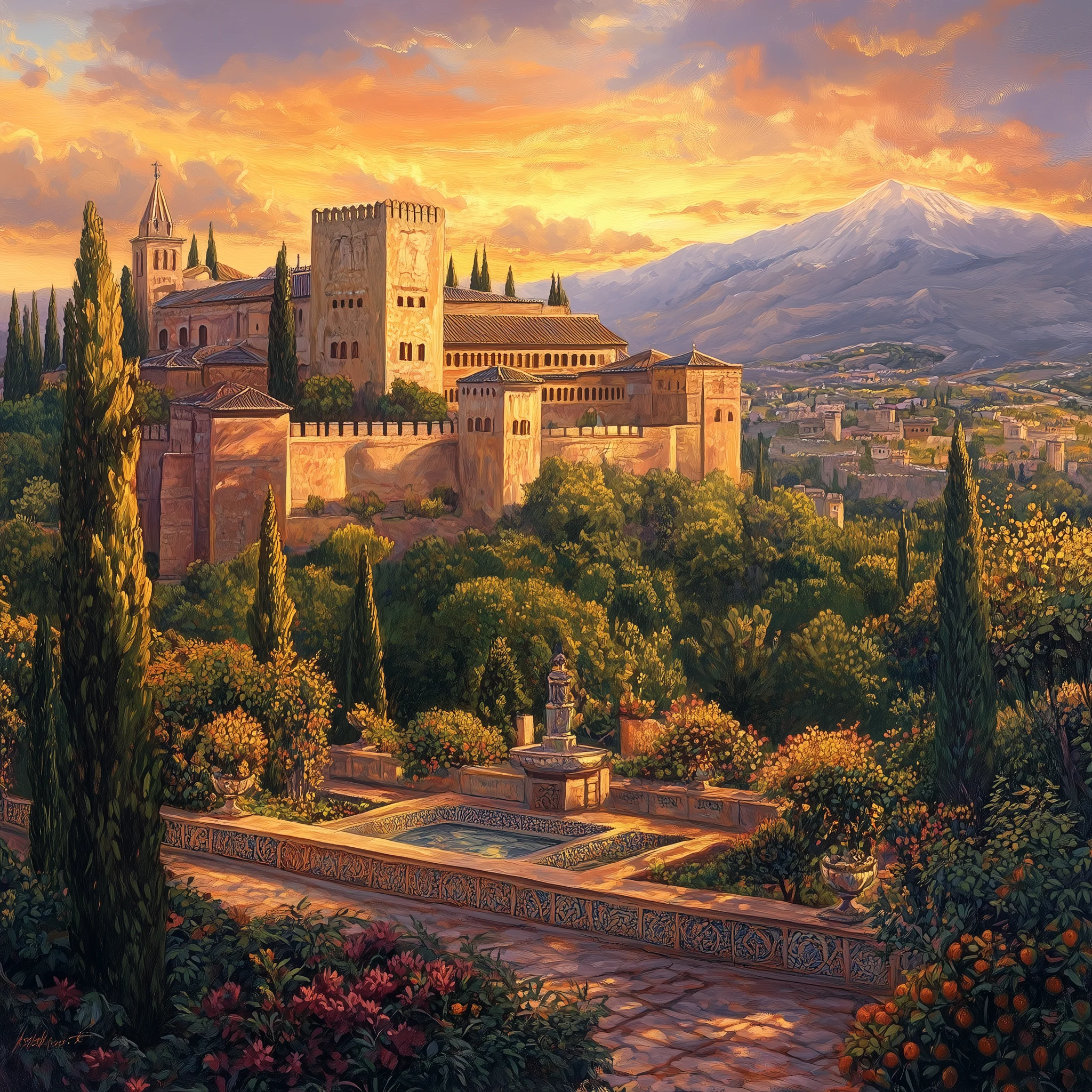
The Alhambra, located on the Sabika hill, is an impressive palace-fortress built during the Nasrid dynasty in the 13th century. This complex is an exceptional testimony to Islamic art, with its intricate designs, reflections in the water and a strong link to nature. The Alhambra stands out for its gardens, known as the Generalife Gardens, which offer an elegant contrast to the majesty of the palace.
Inside, the famous Nazares Palace features rooms such as the Mexuar, the Comares and the impressive Hall of Ambassadors. Each room is decorated with elaborate stucco, vibrantly colored ceramics and exceptional attention to detail reflecting the spirituality and artistry of its time.
The Mosque of Cordoba
The Mosque-Cathedral of Cordoba, also known simply as the Mosque, is one of the most significant monuments of Islamic art in Europe. Originally built in 785, it has been enlarged several times and is famous for its forest of columns and horseshoe arches, which create a sense of immensity inside. Its architecture is a sublime example of Islamic design, with decorative elements including intricate mosaics and calligraphy that pay homage to the Muslim faith.
The mixture of cultural influences in the Mezquita reflects the coexistence of Muslims, Jews and Christians in medieval Cordoba. After the Reconquest, it was transformed into a cathedral, integrating Christian elements into its structure. This architectural dialogue between different traditions makes the Mezquita a unique place that tells the story of coexistence in the Iberian Peninsula.
The Great Mosque of Samarra
Located in Iraq, the Great Mosque of Samarra, built in the 9th century, is famous for its impressive minaret, known as the Malwiya. This spiral minaret stands out among Islamic structures, reaching a height of approximately 52 meters. Its unique design represents a fusion of architectural influences that defy the conventions of the time.
The mosque was conceived as a place of prayer and congregation, reflecting the grandeur of the Abbasid caliphate. Although much of the original structure has been destroyed over the centuries, the remnants that remain are still a strong symbol of medieval Islamic architecture and its impact on the region.
The Taj Mahal in India
The Taj Mahal, located in Agra, is perhaps the most recognized example of Islamic architecture in the world. This mausoleum, built in the 17th century by the Mughal emperor Shah Jahan in memory of his wife Mumtaz Mahal, is a masterpiece of symmetry and beauty. Composed mainly of white marble, the Taj Mahal defies architectural convention with its splendor and unparalleled elegance.
The gardens surrounding the Taj Mahal are laid out in a pattern of quads, symbolizing paradise. Every element of the complex, from the intricate patterns to the perfect arrangement of trees and pathways, has been carefully conceptualized to create a place of contemplation and spirituality that evokes the emperor's deep connection of love for his wife.
The Al-Aqsa Mosque in Jerusalem
The Al-Aqsa Mosque is one of the holiest shrines in Islam. Located on the Temple Mount in Jerusalem, this mosque is a complex that includes the famous Dome of the Rock, a site of great religious significance. Built in the 7th century, the mosque has undergone several transformations and repairs over the centuries.
The mosque's design incorporates typical features of Islamic architecture, such as its impressive dome, beautiful mosaics and intricate internal decoration. The Al-Aqsa Mosque is an example of the cultural and spiritual richness that characterizes Islamic architecture, being a focal point for the Muslim community and a symbol of their heritage in the Old City of Jerusalem.
Cultural influences and regional styles
Islamic architecture has been deeply influenced by the civilizations and cultures with which it has interacted throughout its history. This exchange has resulted in a rich diversity of regional styles that reflect both local heritage and Islamic traditions.
Persian architecture
Persian architecture has left a significant mark on the development of the Islamic style, especially after the fall of the Sassanid Empire. Characteristics of this architecture include the use of large domes, elaborate mosaics and gardens arranged in symmetry.
Characteristics and examples
Among the most notable features of Persian architecture are:
- Large domes: They become prayer chambers in mosques that rise majestically on the horizon.
- Courtyards and gardens: The incorporation of gardens, known as 'charbagh', symbolizes paradise and promotes harmony with nature.
- Ornamental details: Use of bright tiles and geometric patterns that reflect the richness of Persian culture.
Emblematic examples of Persian architecture include the Shah's Mosque in Isfahan and the Golestan Palace in Tehran, noted for their artistic splendor and significant influence on later Islamic architecture.
Byzantine architecture
Byzantine influence is evident in the use of domes and arches in Islamic architecture, especially in those regions that were part of the former Byzantine Empire. The structures of this style reflect the grandeur and complexity of Byzantine architecture, which was adapted to Islamic needs over time.
Mosques inspired by Hagia Sophia
The Hagia Sophia in Istanbul is a clear reference of Byzantine architecture. Its transformation into a mosque left a significant legacy and was used as a model in the construction of future mosques, as is the case of the Blue Mosque, which incorporates similar visual elements such as:
- Large domes dominate the space.
- Intricate mosaic and tile decorations.
- Horseshoe arches that are integrated into the general structure.
These features have been transformed and reinterpreted in different contexts, thus enriching the diversity of the Islamic architectural landscape.
Hispano-Islamic architecture
The influence of Islamic architecture on the Iberian Peninsula, especially between the 8th and 15th centuries, has been monumental. During the period of Al-Andalus, styles were developed that fused local and Muslim elements, giving rise to a unique art.
Outstanding monuments in Spain
In Spain, there are several monuments that bear witness to this rich heritage, such as:
- The Alhambra in Granada: With its combination of palaces, gardens and courtyards, it represents the apogee of Spanish-Islamic architecture, reflecting the contact between cultures.
- The Mosque of Cordoba: This building, which was originally a church, features an impressive forest of columns and horseshoe arches, a symbol of the architectural ingenuity of its time.
- The Alcazar of Seville: A palace that shows the fusion of different styles and reflects the richness of Islamic art in the region.
These monuments are a reflection of the symbiosis between the Islamic and the Hispanic, and capture the essence of a period where culture flourished together.
Mughal architecture
Mughal architecture, developed on the Indian subcontinent, represents one of the great landmarks of Islamic influence. This style is characterized by the combination of Islamic elements and local traditions, creating a distinctive and grandiose approach.
Importance in the Indian subcontinent
Mughal architecture was consolidated in the 16th century, with the construction of impressive structures that not only served religious purposes, but were also manifestations of power. Famous examples include:
- The Taj Mahal: One of the most emblematic buildings in the world, with its white dome and complex gardens symbolizing eternal love.
- The Friday Mosque in Delhi: which combines impressive scale with great attention to artistic detail.
- The Red Fort in Agra: Distinctive for its imposing architecture of red sandstone and marble, which shows the grandeur of the Mughal Empire.
These buildings are not only representative of Mughal splendor, but also highlight the integration of different building styles.
Timurid and Mamluk architecture
Timurid architecture, developed from the 14th century onwards, is distinguished by its imposing domes and the use of tiles in its decorations. Influenced by the Persian heritage, this architecture had a very particular approach to symmetry and ornamentation.
Distinctive elements
Key elements that define the timurida architecture include:
- Large platforms: Which elevate the structures, creating an impressive visual effect.
- Detailed domes: Decorated with intricate patterns and vibrant colors, contributing to the majesty of the design.
- Patios surrounded by high walls: They provide a sense of intimacy and privacy.
For its part, Mamluk architecture, present in Egypt, is characterized by the use of stone in large constructions, as well as by the development of religious complexes that show both aesthetics and the expression of political power.
Ottoman architecture
The culmination of Islamic influence in architecture is reflected in Ottoman architecture, which has left a lasting legacy in various regions. This style is noted for its grandeur and the magnificence of its buildings.
Main features and examples
Notable features of Ottoman architecture include:
- Extensive domes: which dominate the skyline of many cities and add a distinctive character to mosques.
- Elegant minarets: Which are gracefully raised, serving as a symbol of faith and community.
- Large courtyards: They encourage social and spiritual interaction among the faithful.
Representative examples are the Süleymaniye Mosque in Istanbul and the Sultan Ahmed Mosque, known as the Blue Mosque. These structures not only evoke a sense of awe at their size and beauty, but also testify to the architectural skill and power of the Ottoman Empire.
Role of Islamic architecture in culture and religion.
Islamic architecture plays a fundamental role in shaping the cultural and religious life of Muslim communities. Its design and layout reflect spiritual and social values deeply rooted in the Islamic tradition.
The mosque as a community center
Mosques represent the core of social and spiritual life in Islamic communities. They not only function as spaces for prayer, but are also places for meeting and coexistence. This makes them community centers where interpersonal relationships and social cohesion are fostered.
In this context, several specific functions can be identified:
- Prayer spaces: The main function of a mosque is to provide a place for prayer, where the faithful congregate five times a day. This collective act fosters a sense of unity among the attendees.
- Education and knowledge: Many mosques include attached schools or madrasas. These spaces allow the teaching of the Koran and other relevant knowledge, contributing to the formation of the community.
- Social activities: Mosques often facilitate events and activities such as celebrations, lectures and conferences. These events strengthen community ties.
Religious symbolism in buildings
Symbolism is a key feature of Islamic architecture. Every building, and especially mosques, is designed with not only functionality in mind, but also the visual representation of religious concepts. This is manifested through various architectural elements:
- Minaret: This element not only has a practical function of calling the faithful to prayer, but also symbolizes the connection between the earth and the divine, rising towards heaven.
- Mihrab: This niche in the mosque wall indicates the direction of Mecca. Its design is often exquisite, reflecting the importance of orientation and direction in the practice of Islam.
- Decoration: The geometric motifs and Arabic calligraphy adorning mosques contain quotations from the Quran, serving as a constant reminder of Islamic faith and principles. This decoration not only beautifies, but also educates the faithful about their religion.
The influence of spirituality on design
The design of Islamic buildings is deeply influenced by spirituality. It seeks to create an environment conducive to meditation and reflection, in line with the tenets of Islam. This is achieved through different aspects:
- Use of space: Mosques are often arranged in a way that facilitates movement and congregation, thus promoting a collective prayer experience that strengthens community.
- Natural light: Lighting is a fundamental element, with large windows and skylights that allow light to enter. This interaction between light and space symbolizes the presence of the divine, evoking a sacred environment.
- Water features: Many mosques incorporate fountains or ponds. These elements not only have aesthetic value, but also symbolize purification, a central concept in Islamic practice.
Materials and construction techniques
Islamic architecture is distinguished by its ingenious use of materials and techniques that reflect adaptability and mastery of building traditions. The materials selected not only fulfill structural functions, but also contribute to the aesthetics of the buildings.
Brick: versatility and use
Brick has been one of the main materials in Islamic construction. Its versatility and availability make it an ideal choice for various regions, especially those where other resources are limited. Islamic architects employed bricks in different forms, from solid blocks to fired bricks, which allowed the creation of durable and complex structures.
A highlight of the use of brick is its ability to form arches and vaults. In various mosques, it can be seen how bricks were used to build impressive vaulted ceilings that are not only functional, but also provide a unique aesthetic quality. Often, decorative, carved or glazed bricks were used, offering an impressive visual impact and a high degree of personalization.
Stone: durability and aesthetics
Stone has been another primary material in Islamic architecture, prized for its strength and beauty. This material has been used in the construction of iconic monuments and ceremonial structures. Stone's ability to stand the test of time has allowed many religious and civil buildings to survive to the present day.
Stone constructions are often exquisitely carved, incorporating reliefs and geometric patterns that have deep cultural significance. Mosques such as the Great Mosque of Samarra employ stone in their design, which not only provides solidity, but also enhances the majesty of Islamic architecture. The colors and textures of the stone used add a sense of authenticity, connecting the structure to the local environment.
Wood: decoration and structure
Wood has played an essential role in Islamic architecture, not only as a structural material, but also as a decorative element. Used in ceilings, doors and architectural elements, wood can be carved with intricate patterns that reflect the craftsmanship of Islamic carpenters. Wood elements are often incorporated into the design of mosques and palaces, notably in the fabrication of movable walls and lattices that maximize air circulation and natural light.
The aesthetics of wood are highlighted in furniture and decorative elements within the buildings, offering an attractive contrast to other colder materials such as stone and brick. The use of untreated wood or simple finishes highlights the natural beauty of the material, aligning with Islamic architecture's approach to connecting with nature.
Ceramics and tiles: colors and patterns
Ceramics and tiles are central to the ornamentation of Islamic architecture, known for their use of vibrant colors and complex geometric patterns. These elements, often covering entire surfaces, bring a distinctive character to mosques and palaces. Tiles are used not only on floors, but also on walls and domes, creating an impressive visual effect.
- The geometric patterns are symbolic, representing concepts of order and beauty.
- The tiling technique allows for a wide variety of designs that enrich the aesthetics of Islamic spaces.
- The colors used, especially blue and green, are associated with spirituality and nature, adding cultural dimensions to the architectural environment.
Gypsum: uses in construction and decoration
Gypsum is another material widely used in Islamic architecture, especially in the creation of reliefs and fine decorations. It is used in the production of stuccoes that allow Islamic architects to express the complexity of their designs. This material is ideal for shaping intricate inscriptions and floral motifs that adorn the walls of mosques and palaces.
In addition to its decorative use, gypsum plays a structural role in some buildings, serving as a bonding material that protects other structures from moisture. The flexibility of plaster allows for a variety of finishes, from smooth surfaces to textured patterns that enrich the experience of the interior space.
Advanced construction techniques
The construction techniques employed in Islamic architecture are testimony to a deep technical knowledge and an ability to innovate. The combination of materials and construction methods has allowed the creation of structures that are not only aesthetically pleasing, but also extremely functional.
Notable techniques include:
- Construction of arches and vaults: These elements not only provide structural support, but also contribute to the visual majesty of the spaces.
- Mosaics: The integration of ceramics into decorative patterns creates rich and complex surfaces that characterize many Islamic buildings.
- Stucco techniques: The use of stucco to create reliefs and detailed decorations adds a level of sophistication to the architecture.
The ability to adapt techniques to different environments and local resources has contributed to the diversity and richness of Islamic architecture worldwide. These techniques not only represent a constructive practice, but also carry a deep cultural and spiritual symbolism.
The concept of Raw Luxury is manifested in Islamic architecture through a fusion of authenticity and elegance, where priority is given to natural materials and organic forms that reflect the cultural and spiritual essence of this tradition.
The concept of Raw Luxury in Islamic architecture
Natural materials
In Islamic architecture, the use of natural materials is fundamental. These materials not only add beauty, but are also integrated into the design philosophy, seeking a deep connection with the environment. Highlights include:
- Untreated wood: Used in ceilings, doors and decorative elements. Wood, in its purest state, brings warmth and authenticity to spaces, enhancing the overall aesthetics of buildings.
- Stone: This material offers durability and grandeur. Islamic constructions use local stones that not only ensure the stability of the structures, but also add a distinctive character to each building.
- Ceramics and tiles: Tiles, in vibrant hues and intricate patterns, are essential in the ornamentation of facades and interior spaces. These ceramic elements reflect the skilled craftsmanship of Islamic cultures, providing a unique aesthetic dimension.
- Natural textiles: Fabrics, such as linen and cotton, are used in decoration and in the creation of tapestries that embellish interiors, maintaining harmony with nature.
Organic aesthetics
The organic aesthetic in Islamic architecture is characterized by a design that seeks symbiosis with nature. This approach highlights elements that come from the immediate environment, creating spaces that are welcoming and harmonious. Among the elements that stand out in this aesthetic are:
- Fluid shapes: The designs are inspired by curves and nature, moving away from straight lines and offering an organicity that reflects the natural world. This translates into interiors and exteriors that flow with the natural environment.
- Landscape integration: The architecture seeks to integrate into the surrounding landscape, taking advantage of views and natural resources. Gardens, patios and open spaces add to the design, providing a place for reflection and rest.
- Interaction with light: The manipulation of light plays an essential role in organic aesthetics. The strategic arrangement of windows and skylights allows natural light to penetrate the spaces, creating atmospheres that change throughout the day.
Examples of Raw Luxury in Islamic Architecture
The concept of Raw Luxury can be seen in various Islamic buildings that have managed to integrate natural materials and an organic aesthetic. Some of the emblematic buildings that illustrate this concept are:
- The Alhambra in Granada: This palace and fortress is an outstanding example where the simplicity of the materials is mixed with elaborate decorations. The courtyards and gardens reflect the use of natural elements in its design.
- The Taj Mahal in India: With its use of white marble and natural surroundings, this mausoleum represents a sublime blend of luxury and authenticity, where every element is designed to be a tribute to the beauty of nature.
- The Mosque of Cordoba: This monument not only impresses with its size, but also stands out for its intelligent use of marble arches and columns, maintaining a connection with the immediate surroundings through the use of local materials.
These examples show how Islamic architecture has succeeded in interpreting the concept of Raw Luxury, creating spaces that are not only functional and beautiful, but also tell a story of respect for nature and culture. Through this approach, a rich heritage is manifested that continues to inspire contemporary architects and designers in their search for a balance between beauty and authenticity.
Preservation of Islamic architecture
The preservation of Islamic architecture is a critical process that seeks to protect and restore the buildings that represent this rich cultural tradition. As time progresses, different challenges arise that threaten these iconic structures.
Contemporary challenges
Islamic architecture faces a number of challenges in the contemporary context. These problems can be diverse and complex, ranging from environmental factors to political and social issues.
- Natural wear and tear: Weather conditions, such as wind and rain erosion, play a significant role in the deterioration of old buildings. Original materials, often vulnerable, require special attention to ensure their preservation.
- Uncontrolled urbanization: Urban sprawl often results in the demolition or modification of historic buildings. New development can lead to the loss of unique cultural and architectural contexts, displacing Islamic structures of great historical value.
- War: In some regions, conflicts and wars have caused irreparable damage to important Islamic monuments. The deliberate or accidental destruction of these cultural heritages is a tragedy that is repeated in various parts of the world.
- Lack of funding: Restoration and proper maintenance of these buildings require significant resources. Sometimes, lack of financial support limits the interventions necessary to preserve the structures.
Conservation and restoration initiatives
In the face of these challenges, various initiatives have emerged to act on the preservation of Islamic architecture. These initiatives encompass both governmental approaches and civil society efforts.
- Government projects: Many countries with a rich Islamic heritage have implemented conservation programs that seek to restore and protect these buildings. These initiatives may include the creation of heritage protection laws.
- International NGOs and associations: Non-governmental organizations are also active in conservation. They conduct awareness campaigns and fund restoration projects to help save endangered structures.
- Research and education: Training specialists in conservation and restoration is essential. Many universities and research centers are creating programs of study focused on methods of preserving Islamic architecture.
- Regional collaborations: Partnerships are emerging between countries to share knowledge and resources. International cooperation facilitates the exchange of experiences that benefit the conservation of these heritages.
Importance of the Islamic architectural heritage
Islamic architectural heritage represents not only a series of structures, but a rich narrative of the history, culture and identity of entire communities. The preservation of these buildings is critical for multiple reasons.
- Cultural value: Islamic buildings are witnesses of the history of the civilizations that built them. Through them, the beliefs, traditions and ways of life of past societies are understood.
- Community identity: Islamic architecture helps sustain the cultural identity of Muslim communities, serving as a symbol of faith and local pride.
- Tourism and economy: Many Islamic structures attract millions of tourists each year, contributing to the economic development of the regions where they are located. Preservation of this heritage can potentially increase revenue through cultural tourism.
- Education and awareness: The preservation of these buildings also sparks interest in learning and understanding the history of Islamic art, promoting respect for cultural diversity.
Protecting and restoring Islamic architecture is a task that involves various sectors of society. Through collaboration and commitment, we can ensure that these masterpieces continue to inspire future generations.